Dicen que en Malta hay 365 iglesias. Cada cual más bonita.


https://www.disfrutamalta.com/tres-ciudades
Una de las joyas históricas de Malta son las Tres Ciudades de Senglea, Vittoriosa y Cospicua
Los Caballeros de la Orden de Malta fueron los encargados de edificar estas históricas ciudades y hoy en día su huella permanece vigente en numerosos edificios de Las Tres Ciudades, cuya historia se remonta a finales del siglo XVI.
La ciudad con más encanto de La Cottonera es Vittoriosa, conocida por los malteses como Birgu. Debido a su excelente ubicación junto al mar, los caballeros la convirtieron en capital de Malta hasta 1565, cuando pasó el testigo a La Valeta.
Ese año tuvo lugar el Gran Sitio de Malta, un episodio que unió a los Caballeros de la Orden y a la población local para frenar al ejército otomano. El principal bastión de Vittoriosa es el Fuerte de San Ángel, que sirve para entender la importancia militar que tuvo la ciudad.
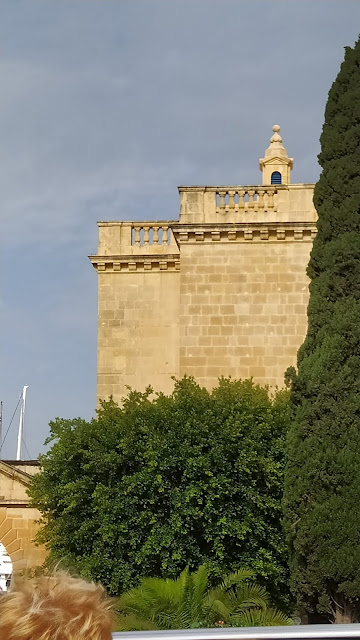
La arquitectura de Vittoriosa permanece casi intacta y hoy en día es posible imaginar cómo vivían aquí los caballeros hospitalarios y los nobles llegados de Castilla. El edificio más significativo del casco antiguo de la ciudad es el Palacio del Inquisidor, una antigua cárcel.




https://www.visitmalta.com/en/a/info/valletta
Fancy a stroll through the Capital?
With its age-old bastions, ornate architecture, and bustling cobbled streets, still very much in action today, Valletta is the ideal amalgamation of history and modern life. Aptly coined in 2018 as the European Capital of Culture, there are tons to see and do in this spectacular City, founded in the sixteenth Century by the Knights of St John.
Whether gazing at the Three Cities from the breathtaking Barrakka Gardens, dining at one of its outstanding eateries, or drooling over the Caravaggio in St John’s Co-cathedral, the only stressful thing about a trip to Valletta is trying to fit it all in!


https://www.malta.com/en/about-malta/city-village/mdina
Mdina is a fortified medieval town enclosed in bastions, located on a large hill in the centre of Malta. The town was the old capital of Malta, and with its narrow streets, few inhabitants and beatuful views over the Island it is truly a magical town. Mdina is referred to as the “Silent City” by Maltese and visitors alike - no cars (except those of a limited number of residents) have permission to enter Mdina and the town provides a relaxing atmosphere among the visitors walking its narrow streets and alleyways.


INFORMACIÓN SOBRE MALTA
https://en.wikipedia.org/wiki/Malta
Malta (/ˈmɔːltə/ ( listen) MAWL-tə, UK also /ˈmɒltə/ MOL-tə,[12] Maltese: [ˈmɐltɐ]), officially known as the Republic of Malta (Maltese: Repubblika ta' Malta [rɛˈpʊbːlɪkɐ tɐ ˈmɐltɐ]) and formerly Melita, is a Southern European island country consisting of an archipelago in the Mediterranean Sea.[13] It lies 80 km (50 mi) south of Sicily, 284 km (176 mi) east of Tunisia,[14] and 333 km (207 mi) north of Libya.[15] With a population of about 515,000[4] over an area of 316 km2 (122 sq mi),[3] Malta is the world's tenth smallest country in area[16][17] and fourth most densely populated sovereign country. Its capital is Valletta, which is the smallest national capital in the European Union by area at 0.61 km2 (0.24 sq mi). The official and national language is Maltese, which is descended from Sicilian Arabic that developed during the Emirate of Sicily, while English serves as the second official language. Italian and Sicilian also previously served as official and cultural languages on the island for centuries, with Italian being an official language in Malta until 1934 and a majority of the current Maltese population being at least conversational in the Italian language.
Malta has been inhabited since approximately 5900 BC.[18] Its location in the centre of the Mediterranean[19] has historically given it great strategic importance as a naval base, with a succession of powers having contested and ruled the islands, including the Phoenicians and Carthaginians, Romans, Greeks, Arabs, Normans, Aragonese, Knights of St. John, French, and British, amongst others.[20] Most of these foreign influences have left some sort of mark on the country's ancient culture.
Malta became a British colony in 1813, serving as a way station for ships and the headquarters for the British Mediterranean Fleet. It was besieged by the Axis powers during World War II and was an important Allied base for operations in North Africa and the Mediterranean.[21][22] The British parliament passed the Malta Independence Act in 1964, giving Malta independence from the United Kingdom as the State of Malta, with Elizabeth II as its queen.[23] The country became a republic in 1974. It has been a member state of the Commonwealth of Nations and the United Nations since independence, and joined the European Union in 2004; it became part of the eurozone monetary union in 2008.
Malta has had Christians since the time of Early Christianity, though was predominantly Muslim while under Arab rule, at which time Christians were tolerated. Muslim rule ended with the Norman invasion of Malta by Roger I in 1091. Today, Catholicism is the state religion, but the Constitution of Malta guarantees freedom of conscience and religious worship.[24][25]
Malta is a tourist destination with its warm climate, numerous recreational areas, and architectural and historical monuments, including three UNESCO World Heritage Sites: Ħal Saflieni Hypogeum,[26] Valletta,[27] and seven megalithic temples which are some of the oldest free-standing structures in the world.[28][29][30]
https://es.wikipedia.org/wiki/Malta
Malta, oficialmente la República de Malta (en maltés: Repubblika ta' Malta; en inglés: Republic of Malta), es uno de los veintisiete Estados soberanos que forman la Unión Europea. Es uno de los estados más densamente poblados, compuesto por un archipiélago y situado en el centro del Mediterráneo, al sur de Italia, al este de Túnez y al norte de Libia. Debido a su situación estratégica, ha sido gobernado y disputado por diversas potencias en el transcurso de los siglos. Desde 1964 es independiente y en 2004 se adhirió a la Unión Europea.3
Malta es un popular destino turístico con su clima cálido, numerosas áreas recreativas y monumentos arquitectónicos e históricos, incluidos tres sitios del Patrimonio Mundial de la UNESCO: el Hipogeo de Hal Saflieni, La Valeta, y siete templos megalíticos que son algunas de las estructuras independientes más antiguas en el mundo. En 2018 tenía una población de 475 700 habitantes con una distribución de 1457 hab./km², la más alta densidad demográfica entre los países de la Unión Europea. Este país insular es considerado uno de los seis micro-Estados del continente europeo.
Convocadas las:
Becas y ayudas para alumnos con necesidad específica de apoyo educativo
